Working as an escort doesn’t mean you have to live paycheck to paycheck. In fact, many independent escorts in Toronto and beyond are building real financial security - not by luck, but by planning. The income can be high, but it’s also unpredictable. One week you might earn $3,000, the next you might earn $500. Without a system, that kind of swing can ruin your finances fast. The good news? You don’t need a finance degree to get control. You just need simple, practical habits that work with how your job actually operates.
Track Every Dollar - Even the Small Ones
Most people think budgeting means writing down rent and groceries. For escorts, it means tracking every single payment - cash, Venmo, Interac, crypto, even tips in gift cards. If you don’t track it, it disappears. Start with a free app like Money Lover or even a simple Google Sheet. Label each income entry clearly: "Private Session - Downtown", "Travel Fee - Mississauga", "Repeat Client - Weekly". This isn’t about being paranoid. It’s about knowing exactly where your money comes from so you can plan around it.
One escort I know in Toronto kept all her cash in a shoebox. She thought she was saving. Then she got sick for two weeks and had to dip into savings she didn’t even know she had - because she never wrote down what she’d earned. She ended up borrowing from a friend. That’s not financial independence. That’s chaos.
Separate Your Money Like a Business
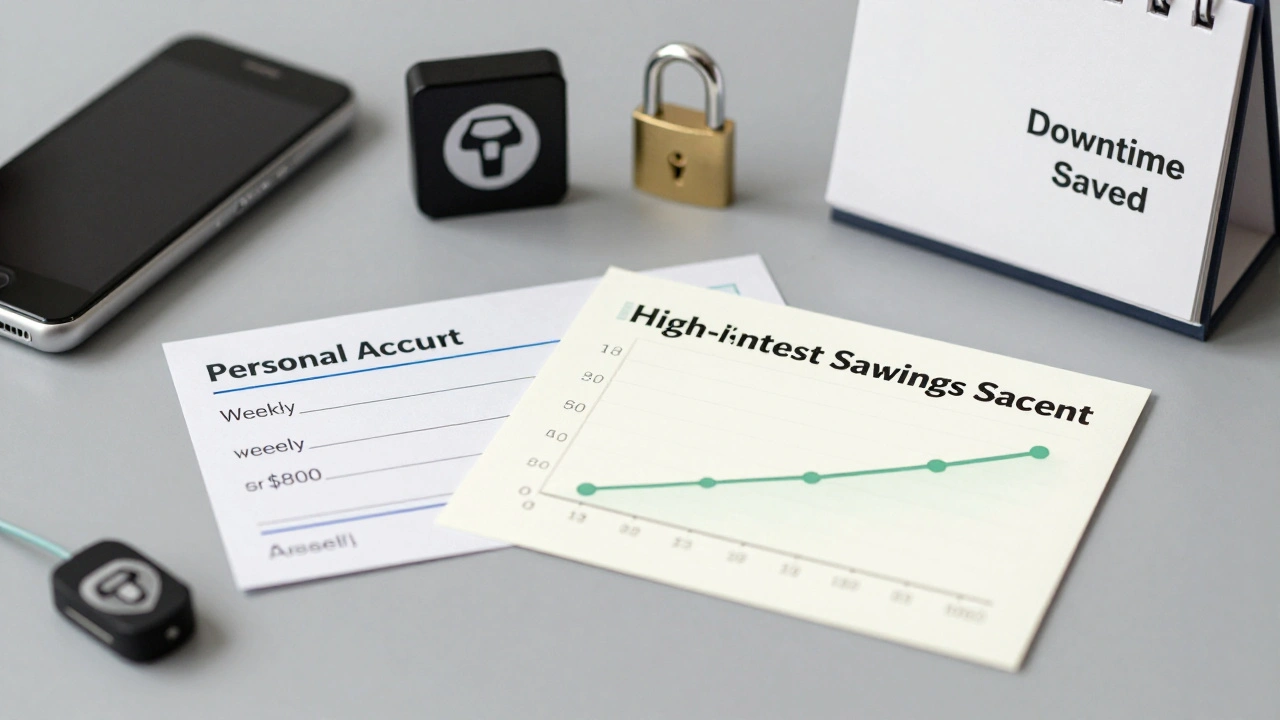
You’re not just an escort - you’re a small business owner. And no legitimate business keeps all its money in one account. Open a separate bank account just for your escort income. When you get paid, deposit it there. From that account, you pay yourself a fixed salary each week - say, $800 - and transfer it to your personal checking account. The rest stays put.
That leftover money? It’s your business fund. Use it for taxes, car maintenance, phone bills, cleaning supplies, or emergency vet visits for your dog. This simple step stops you from spending business money on personal stuff - like a new phone or a weekend trip. And when tax season comes, you won’t be scrambling to find receipts or guessing how much you made.
Set Aside Taxes Before You Spend
In Canada, if you’re self-employed, you owe income tax and CPP contributions. Most escorts don’t realize how much that adds up. If you make $50,000 a year, you’ll owe roughly $10,000-$12,000 in taxes. That’s not $1,000 a month. That’s $850-$1,000 every single month.
Here’s the fix: as soon as you get paid, move 20% of your earnings into a separate savings account labeled "Taxes". Even if you only make $200 one night, put $40 aside. Don’t wait until December. Don’t wait until you "feel like you can afford it." That account should grow quietly, untouched, until April 30. When tax day comes, you won’t be shocked. You’ll be calm.
Build a Safety Net - Even If It’s Small
Life doesn’t pause because you’re an escort. You might get sick. A client might cancel last minute. Your car might break down. You need a buffer. Start with $500. That’s not much, but it’s enough to cover a single emergency - like a taxi home after your ride-share app glitches, or a last-minute drug test.
Once you hit $500, aim for $2,000. That’s three weeks of living expenses if everything stalls. You don’t need $10,000. You just need enough to avoid panic. Put this money in a high-interest savings account - not in crypto, not in your partner’s account, not under your mattress. Use a bank like Tangerine or Simplii. They have no fees, no minimums, and you can access it instantly if you need to.
Plan for Downtime - Not Just Income
Most people think of finances as income minus expenses. But for escorts, downtime is a real cost. If you take two weeks off for vacation, you’re losing income. If you take a month off to heal from burnout, you’re losing rent money. That’s not laziness - it’s sustainability.
Instead of treating downtime as a loss, treat it as an investment. Set a goal: "I’m taking two weeks off in March. I need to save $1,200 to cover my rent during that time." Then, adjust your savings plan. If you normally save $300 a week, save $500 for the next two months. You’ll still have money left over. And when you take that break, you won’t feel guilty. You’ll feel in control.
Use Your Income to Build Real Value - Not Just Stuff
It’s easy to fall into the trap of spending on things that make you feel powerful: designer clothes, expensive makeup, new cars. But those things don’t protect you. They drain you.
Instead, spend your money on things that make your work easier, safer, or more profitable. A good VPN. A secure phone. A car with good gas mileage. A lockbox for your cash. A course on basic bookkeeping. A self-defense class. A subscription to a private booking platform. These aren’t luxuries - they’re tools. And they pay for themselves.
One escort I know spent $1,200 on a certified background check. It cost her nothing to get, but it doubled her client bookings because clients trusted her more. That’s the kind of investment that grows your business - not your closet.

Know What You’re Worth - And Don’t Undersell
Many escorts feel guilty charging what they’re worth. They lower rates to "be nice" or because they think they "don’t deserve it." That mindset kills long-term income. You’re not selling a service. You’re selling time, safety, expertise, and emotional labor. That’s valuable.
Track your hourly rate. If you make $300 for a 90-minute session, that’s $200/hour. If you make $500 for a 4-hour session, that’s $125/hour. Now compare that to other professionals. A plumber makes $80-$120/hour. A therapist makes $100-$180/hour. You’re in the same range - or higher.
Don’t apologize for your rates. Don’t offer discounts unless you’re testing a new service. If a client haggles, say: "My rate is $X. That’s what I charge everyone." Most will respect you for it. And if they don’t? You just saved yourself from someone who doesn’t value your time.
Plan for the Future - Even If It Feels Far Away
You might think, "I’ll think about retirement when I’m 40." But retirement isn’t something you start at 40. It’s something you build slowly, over years. Even if you only put $50 a month into a TFSA, that’s $600 a year. At 5% growth, that’s over $15,000 in 15 years. And you didn’t even notice it was gone.
Open a TFSA with a bank. Set up an automatic transfer of $25 or $50 every payday. Don’t touch it. Don’t check it often. Let it grow. You don’t need to be rich to start. You just need to be consistent.
And if you ever want to leave the industry? That money becomes your bridge. It pays for training, a new business, a move to another city. It gives you freedom - not just money.
Final Tip: Talk to Other Escorts - But Not About Rates
Don’t ask other escorts what they charge. That’s a trap. Every situation is different. Instead, ask: "How do you handle taxes?" "What app do you use to track income?" "How do you take time off without stress?"
There’s a quiet community of escorts in Toronto who meet monthly for coffee. They don’t talk about clients. They talk about bank accounts, insurance, and mental health. That’s the kind of support that lasts.
Managing money as an escort isn’t about being perfect. It’s about being consistent. One small habit, repeated daily, changes everything. Track your income. Separate your money. Save for taxes. Build your safety net. Invest in your work. And never forget - your value isn’t defined by what someone pays you. It’s defined by how you take care of yourself.
Do I need to report my escort income to the Canada Revenue Agency?
Yes. All income from self-employment, including escort work, must be reported to the CRA. You’re considered self-employed, so you must file a T2125 Statement of Business Activities with your annual tax return. Failing to report income can lead to penalties, interest, or audits. Keep detailed records of all earnings and expenses - even cash payments. The CRA doesn’t care how you earn your money, only that you pay what you owe.
Can I open a bank account as an escort?
Yes. Canadian banks cannot legally deny you an account based on your profession, as long as you provide valid ID and proof of address. Many escorts use basic chequing and savings accounts from banks like Tangerine, Simplii, or PC Financial. Avoid banks that ask for detailed business descriptions - you don’t need to disclose your work. Just say you’re self-employed in personal services or consulting. Your account will function like any other.
How much should I save for taxes each month?
Save between 20% and 25% of your net income. If you earn $4,000 a month after expenses, set aside $800-$1,000. This covers federal and provincial income tax, plus Canada Pension Plan contributions. If your income varies, average your last six months of earnings and use that number to calculate your monthly savings. Use a separate savings account labeled "Taxes" so you don’t accidentally spend it.
What expenses can I claim as a self-employed escort?
You can claim any expense directly related to earning your income. This includes: car expenses (mileage or fuel), phone and internet bills, cleaning supplies, makeup and clothing used for work, VPN services, booking platform fees, safety equipment, professional development courses, and even home office space if you use a dedicated room for scheduling or client communication. Keep receipts and log usage percentages - for example, if your phone is 70% for work, claim 70% of the bill.
Should I use a business name or work under my real name?
You don’t need a business name to operate as an independent escort in Canada. You can legally work under your real name. However, if you want to open a business bank account, apply for a business credit card, or build a professional brand, registering a business name (sole proprietorship) is simple and costs $60 in Ontario. It adds credibility and helps separate your personal and professional finances - which makes tax time easier and your money safer.