Walking into your first escort job shift without the right prep is like showing up to a job interview in pajamas. You might know what you’re doing, but the lack of preparation sends the wrong message - and worse, it puts you at risk. This isn’t about glamour. It’s about survival, control, and professionalism. If you’re new to this line of work, your success depends on what you bring with you - and what you leave behind.
Know Your Client Before They Walk In
Never rely on a client’s word alone. Even if they’ve been vetted by the agency or platform, you still need to verify. Ask for a clear photo of their face - not just a profile pic. Request a video call for five minutes before the appointment. Record the call if you can. Keep a screenshot of their profile, their booking history, and any messages exchanged. If they refuse any of this, cancel. No exception.Most agencies now require ID verification for clients, but that’s not foolproof. A fake ID is easy to make. A real person who’s nervous or evasive? That’s a red flag. Trust your gut. Your safety isn’t negotiable.
Essential Supplies to Carry Every Time
You’re not just an escort. You’re a solo operator with zero backup. Treat every shift like a solo mission. Here’s what you need in your bag - no exceptions:- Phone with full battery and portable charger - Keep it on silent mode. Use a burner number if you’re not using an agency platform. Never give out your personal number.
- Emergency button app - Apps like bSafe or Companion let you send your location and trigger an alert with one tap. Set it to notify two trusted contacts automatically.
- Condoms and lube - Always use them. Even if the client says they’re clean. You’re not here to gamble with your health. Carry at least three. Use a fresh one for every new client.
- Hand sanitizer and disinfectant wipes - Clean surfaces before and after. Don’t assume the room is sterile. Wipe down the bed, nightstand, and bathroom handles.
- Small flashlight - For checking dark corners, under beds, or in closets. Many assaults happen in places you can’t see.
- Lockable purse or bag - Keep cash, ID, and your phone inside. Never leave it unattended.
- Basic first aid kit - Bandages, antiseptic spray, pain relievers. You never know when you’ll need it.
Don’t carry your real ID unless absolutely required. Use a fake ID only if you’re legally allowed to. Most agencies don’t ask for it - and if they do, that’s a red flag. Keep your real ID locked at home.
Plan Your Route and Timing
Never show up early. Never arrive alone if you can help it. If you’re driving, park in a well-lit public spot - not in a secluded alley. Use Google Maps to mark your route ahead of time. Save the address as a contact labeled “Work” so it doesn’t show up in your call log.Set a check-in time with a friend. Say: “I’ll text you at 11:30 p.m. If you don’t hear from me, call 911 and give them my location.” That’s non-negotiable. Even if you think it’s overkill. It’s not.
Use ride-share apps like Uber or Lyft to get there and back. Never let a client pick you up. Even if they say, “I’ll be right downstairs.” That’s how people disappear.
Dress for Control, Not Attraction
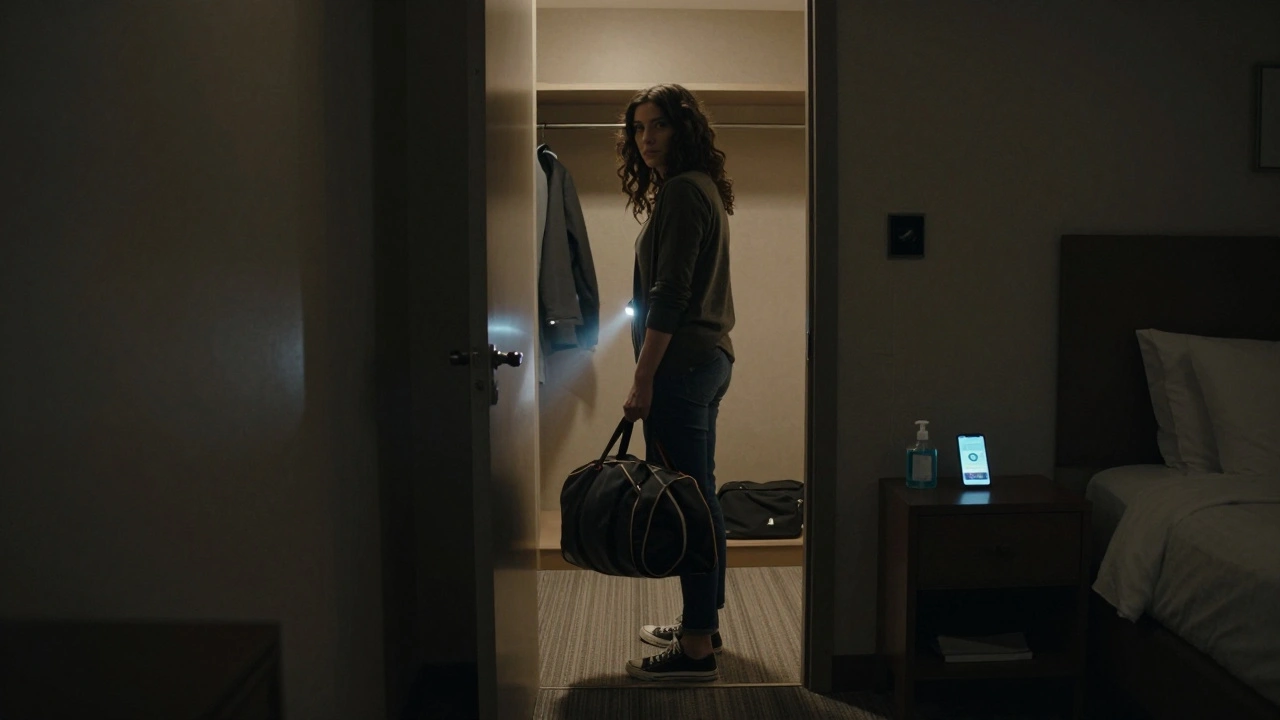
You don’t need to wear a designer dress or heels that make you stumble. Wear something comfortable, easy to move in, and easy to remove. Avoid tight skirts, high heels, or anything that restricts your ability to walk fast or run. Choose clothes you can throw on in five seconds if you need to leave.Wear shoes you can run in. Sneakers or flats. Keep them by the door. If something feels off, you need to be out the door in under ten seconds. Your outfit should help you move - not trap you.
Leave jewelry at home. No rings, no necklaces, no watches. They’re easy to grab. They’re also easy to trace. If you’re carrying cash, keep it in a hidden pocket. Don’t flash it. Don’t count it in front of the client.
Set Boundaries - And Stick to Them
Your limits are not up for negotiation. Not even a little. If the job description says “no kissing,” then no kissing. If it says “no anal,” then no anal. If you’re not comfortable with something, you don’t have to explain why. Just say, “That’s not part of the service.” Then end the appointment.Some clients will test you. They’ll say, “It’s just one time,” or “I’ll pay extra.” Don’t budge. Once you bend, they’ll keep pushing. And next time, they might not ask at all.
Use a code word with your emergency contact. If you text “pineapple,” they know you’re in trouble and need help. Keep it simple. Something no one would guess.

After the Shift - Reset and Recover
Your body and mind need time to reset. Don’t jump straight into your next job. Don’t go out drinking with friends right after. Take a shower. Wash your clothes. Change your sheets if you’re at home. Write down how the shift went - not for anyone else, just for you. What felt right? What felt off? What would you do differently?Keep a log. Date, time, location, client ID (if available), what happened, how you felt. This isn’t just for your safety - it’s for your mental health. You’re not just a service provider. You’re a person. And you deserve to feel safe, even after the door closes.
What Not to Do
Here’s what gets people hurt:- Going to a client’s home without verifying the address
- Accepting cash without counting it in front of them
- Drinking alcohol or taking drugs before or during a shift
- Letting someone else stay in the room during the appointment
- Ignoring your intuition - even if you can’t explain why you’re uneasy
If you’ve done this before, you know how easy it is to talk yourself out of your instincts. Don’t. Your gut is your best security system.
Final Thought: You’re Not Alone
There are networks - real ones - of people who’ve been where you are. Online forums, private groups, local meetups. Find them. Talk to them. Ask questions. Learn from their mistakes. You don’t have to do this alone. And you shouldn’t.Your first shift doesn’t have to be perfect. But it should be safe. And with the right prep, it will be.
What should I do if a client refuses to follow my boundaries?
End the appointment immediately. Don’t argue, don’t negotiate. Say, “This session is over,” and leave. If you’re in their space, walk out the door. Call your emergency contact as soon as you’re in a safe place. Report the incident to your agency or platform. Keep a record of what happened - date, time, location, what they said. Your safety comes before payment or reputation.
Can I use my real phone for escort work?
It’s risky. Use a burner phone or a separate line through apps like Google Voice or Hushed. Keep your personal phone locked away. Never give out your real number. Even if a client says they’ll delete your number, they might not. Your privacy is your power. Protect it.
Do I need to get tested for STIs regularly?
Yes. Get tested every 30 days - no exceptions. Use a clinic that offers confidential testing. Keep your results on file. If you’re working through an agency, they may require proof. Even if they don’t, you should. Your health isn’t optional. And neither is your peace of mind.
What if I’m working independently and don’t have an agency?
You need to be even more careful. Build your own safety system: verify clients, use an emergency app, set check-in times, and never go to a location you haven’t scouted. Use platforms that require ID verification. Avoid private messaging outside the platform. Stay visible in the community - connect with other independent workers. You’re not alone, even if you’re solo.
Should I carry pepper spray or a personal alarm?
It depends on your location. In some places, pepper spray is illegal. In others, it’s allowed but can be used against you in court if you’re accused of aggression. A personal alarm is safer - loud, non-lethal, and legal almost everywhere. But the best defense is preparation: knowing your route, having a backup plan, and trusting your instincts. Tools help, but awareness saves lives.